
Conveyor system retrofit
Has your roller conveyor, shuttle system or transfer car been running for years, but is it becoming less and less reliable? We modernise existing conveyor systems. The steel structure stays; everything that determines performance and reliability is replaced.
We work independently of the original manufacturer, and we take care of the mechanics as well.
When a conveyor system is due for modernisation
A conveyor system rarely fails all at once. It becomes unreliable gradually, and that is what makes it so hard to decide about.
What you usually notice first:
- faults that keep coming back on the same sections;
- drives or frequency inverters that are no longer available;
- a control system that cannot tell you where a load is stuck;
- throughput falling while the volume you handle is growing;
- no way to look in remotely, so every fault means someone on site.
Sounds familiar? Then it is worth working out whether modernising costs less than a new line.
What we replace
Everything except the steel structure.
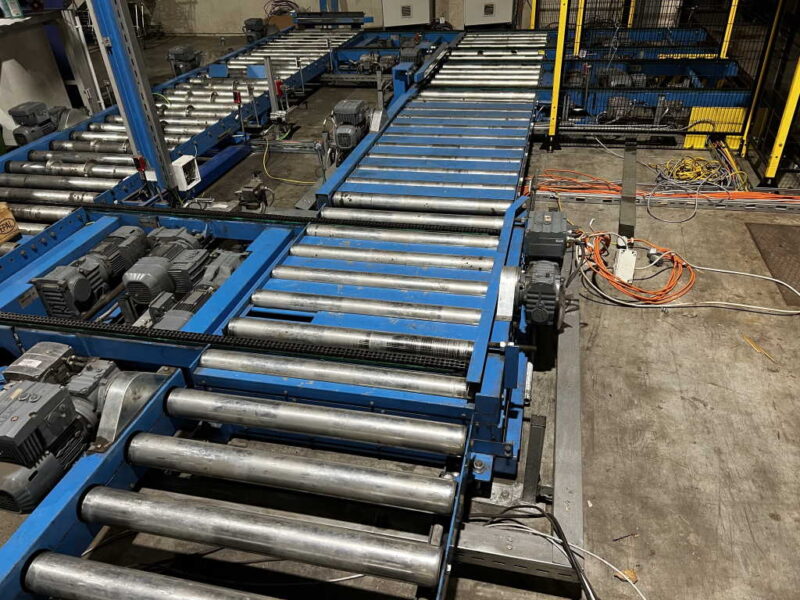
We replace the control system, the frequency inverters and drive control, the motors and gearboxes, the rollers, the chains, belts and bearings, the sensors and photocells, the safety technology, the electrical installation and the control cabinets.
What stays is the steel structure: the frame, the supports and the layout. That is the part that lasts for decades and that already fits your building exactly: around the columns, at the right heights, matched to your process. Having that designed and built again is the most expensive and slowest way to get back what you already have.
Section by section, or all at once?
That depends on how your line is put together.
Can part of the system run on its own, such as a separate branch, a buffer or a loop with its own infeed and outfeed? Then we modernise that part while the rest keeps running. If the line is one continuous chain, it has to come out of service in one go.
So that is the first thing we look at: which parts stand alone and which depend on each other. On that basis we decide together whether it can be done in stages, and what that means for your downtime.
Diagnostics deliver the biggest gain here
With a stacker crane it is about movement. With a conveyor system it is about flow, and that is a different problem.
An obsolete control system reports that something has stopped. A modern one tells you at which section, with which load, and why. That saves searching at the moment your process is waiting.
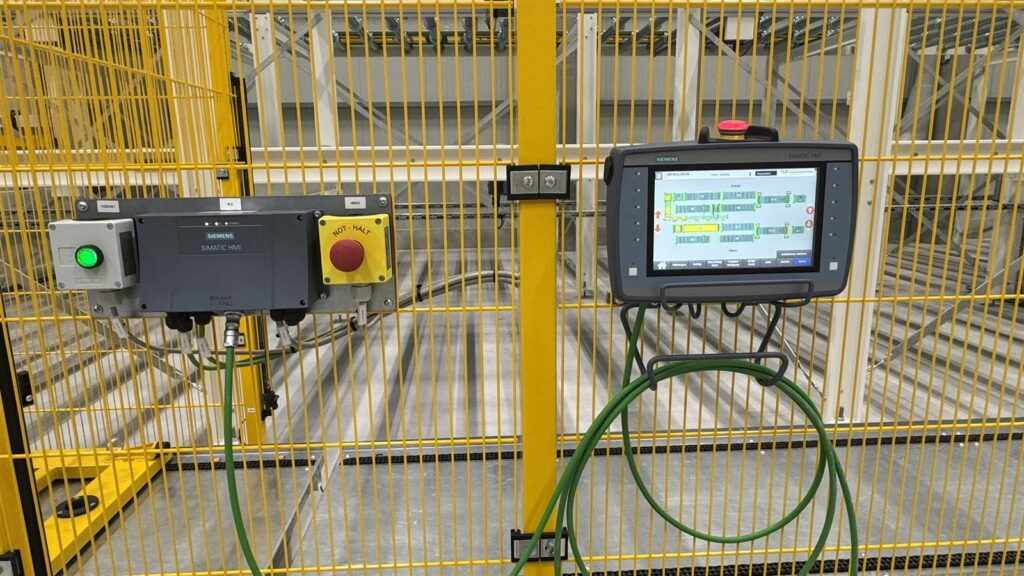
Our framework for conveyor systems runs on Siemens Simatic S7-1500F and handles transport routing, buffer management and handover between sections. That part has already proven itself elsewhere, which shortens the lead time and limits the risk.
Connecting to your higher-level system
We connect our control system to the warehouse control system you already use. Your processes and the way your people work are left untouched.
If you do not have such a layer yet, or the one you have no longer does the job, we can supply it.
Reference: a shuttle system back in operation
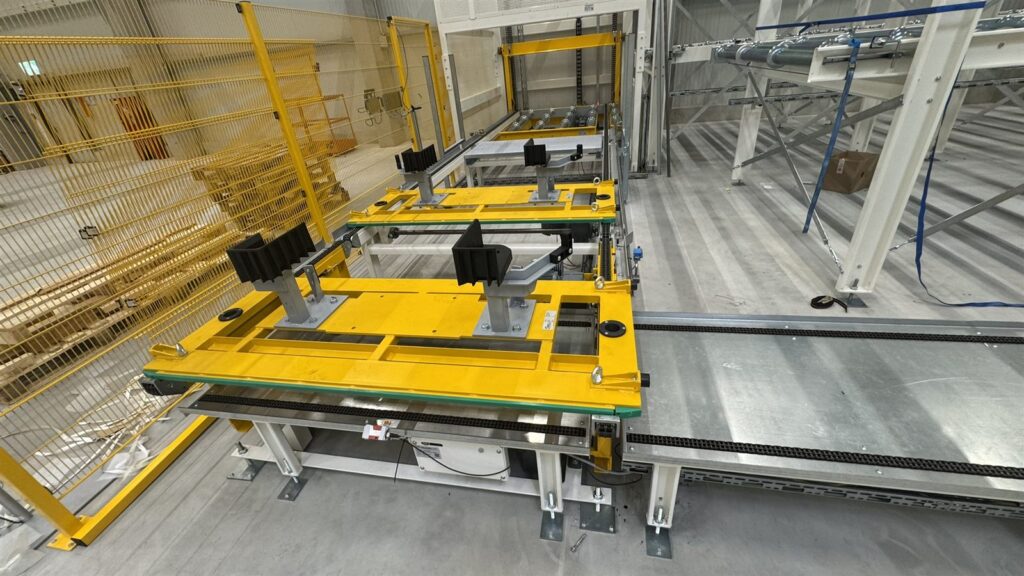
A shuttle system back in operation after a full retrofit. The steel structure stayed in place; everything that determines performance and reliability was replaced.
Frequently asked questions about conveyor retrofits
Can a conveyor system be modernised without replacing the conveyor lines themselves?
Yes. The steel structure (the frame, the supports and the layout) stays. That is where the gain sits: you do not pay again for the part that still has decades in it and that already fits your building.
Everything inside it does come out: controls, drive, mechanical wear parts and electrical installation.
Does the whole line have to stop?
That depends on the layout. If parts of your system run independently, we take those on separately while the rest keeps running. If the line forms one chain, it has to come out of service in one go.
We assess beforehand which parts stand alone and discuss with you what that means for your downtime, before anything is scheduled.
What happens to the existing sensors and photocells?
We replace them. Sensors are often the first thing to cause faults without anyone seeing why, and they are exactly the parts that turn out to be unavailable after years.
With new sensors and a control system that reads out what they report, a fault tells you straight away which section to go to.
Will our warehouse control system still work?
Yes. We connect our control system to the one you already use. Your order flows and the way your people work do not change.
If you still work without a higher-level system, or the one you have no longer does the job, we can supply that layer.
Do you work on conveyor systems from other makes?
Yes. We are not tied to a manufacturer and work on installations regardless of who supplied them.
A roller conveyor consists of a steel structure, drives, sensors, safety technology and a control system. That technology differs less between makes than between years of construction.
When is a new line more sensible than modernising?
When the steel structure no longer does the job, or when your process needs something the line cannot offer, such as a different route, a different capacity or a different layout of the warehouse.
If the structure is still sound and only the technology around it has aged, modernising is finished sooner and needs less downtime. If a new line makes more sense in your case, we will tell you.
Is your conveyor system no longer running as it should?
Roller conveyor, shuttle system or transfer car? What year was it built, and where do the faults keep occurring? That tells us where to look.