
New systems and extensions
Intralogix supplies new conveyor systems and extends existing installations. From engineering and controls through to installation and commissioning, for stacker cranes, shuttle systems and roller conveyor systems.
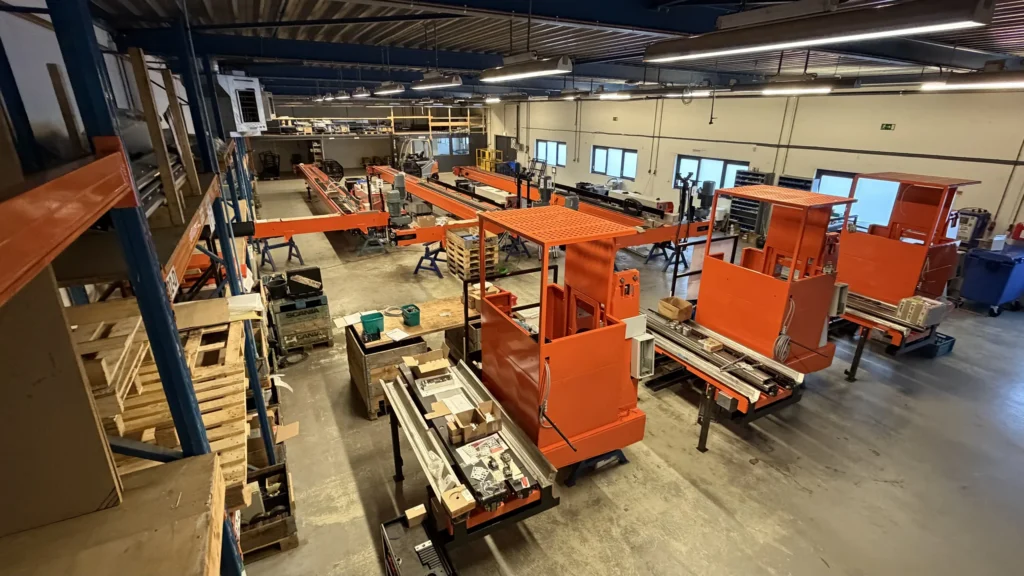
Starting from what is already there
Most of the questions we get are not about an empty warehouse. They are about an installation that is already there and has to do a bit more than it was ever designed for: an extra aisle, a second infeed line, a link to a new part of the building.
We come from this kind of work. We know what is possible in an installation like this, what is not, and where the existing system reaches its limits. An extension simply has to run as part of what is already there.
New conveyor systems
Roller conveyors, transfer cars, shuttles and the infeed and outfeed around them. We supply these as a complete system: the mechanics come from our German partner TLS (Trans Log Systeme), while the control engineering, the electrical installation, the assembly and the commissioning are ours.
You have one point of contact for the whole thing. And our partner builds these systems itself.
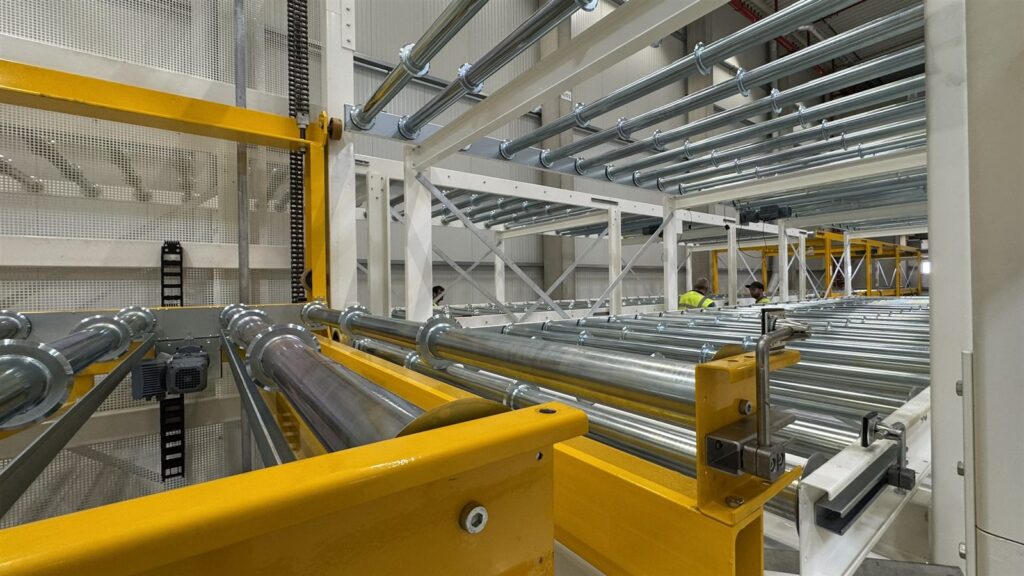
What makes a conveyor system work is not in the conveyors themselves but in the coordination underneath: every pallet is tracked by the system, the stations are matched to each other and to the transport, and the whole is matched to the pace of the process around it. Sensors, drives and safety functions work together so that an operator only has to step in when it is really necessary.
New crane installations
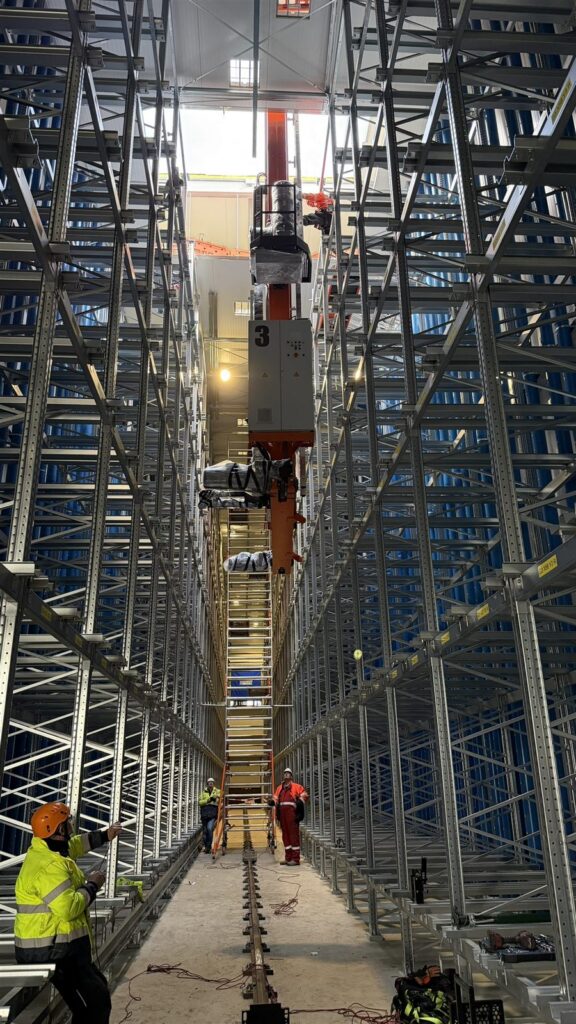
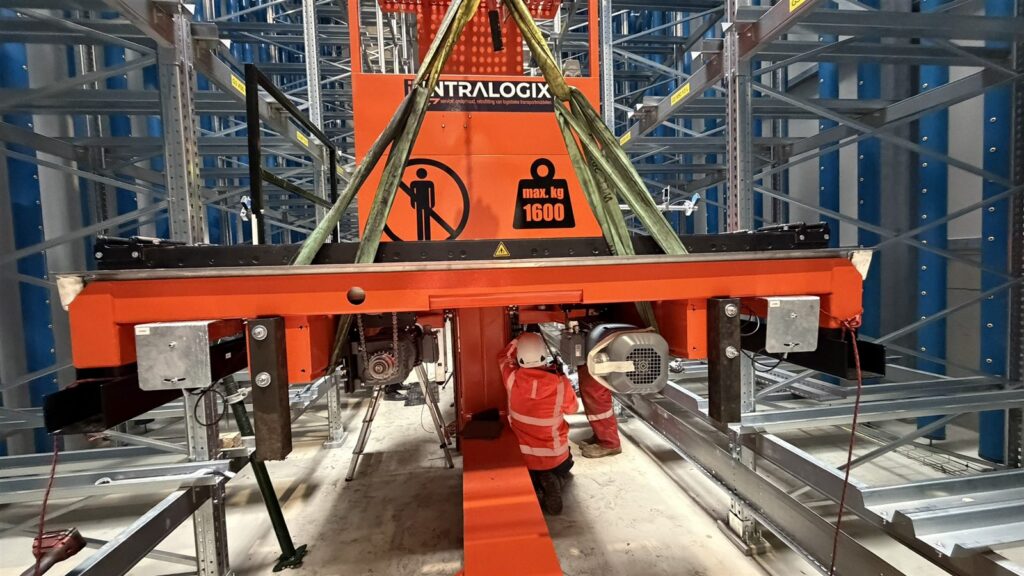
For new stacker cranes we work together with the manufacturer of the mechanics. We installed three new MIAS cranes this way: MIAS supplied the cranes, we supplied the control system, programmed it and commissioned the installation.
That is a form of cooperation more common than you would think. A crane builder supplies excellent mechanics; the controls and the commissioning are a trade of their own.
We can also take care of the complete crane. The engineering, the controls and the commissioning are work we do daily; for the mechanics we work with companies that build them. If you want one point of contact for the whole thing, that can be arranged.
Our technology in an existing installation
We work on straight-running, aisle-bound cranes and on cranes that change aisle.
Cranes that change aisle do not work in isolation: they are part of a whole that is matched mechanically, electrically and in terms of control. Anyone replacing something in there has to understand how the whole works together. On Lalesse systems we know it well; our engineers have worked on them.
Tell us what you have and we will tell you what is possible. We would rather say it beforehand than afterwards.
Do you work with a particular make? See the brands page for what we do per manufacturer. Photographs of completed projects are in the gallery.
What we build on
We work with one platform, so that we can still support what we supply in ten years’ time.
| Component | What we use |
|---|---|
| Control system | Siemens Simatic S7, TIA Portal (always the current version) |
| PLC | Simatic S7-1500F, safety-rated |
| Drives | SEW MOVI-C, modular |
| Operator controls | Siemens TP Comfort Panels |
| Remote support | mbCONNECT |
An installation for which parts and know-how stay available for years is worth more than one that was a fraction faster on the day it was handed over.
From drawing to release
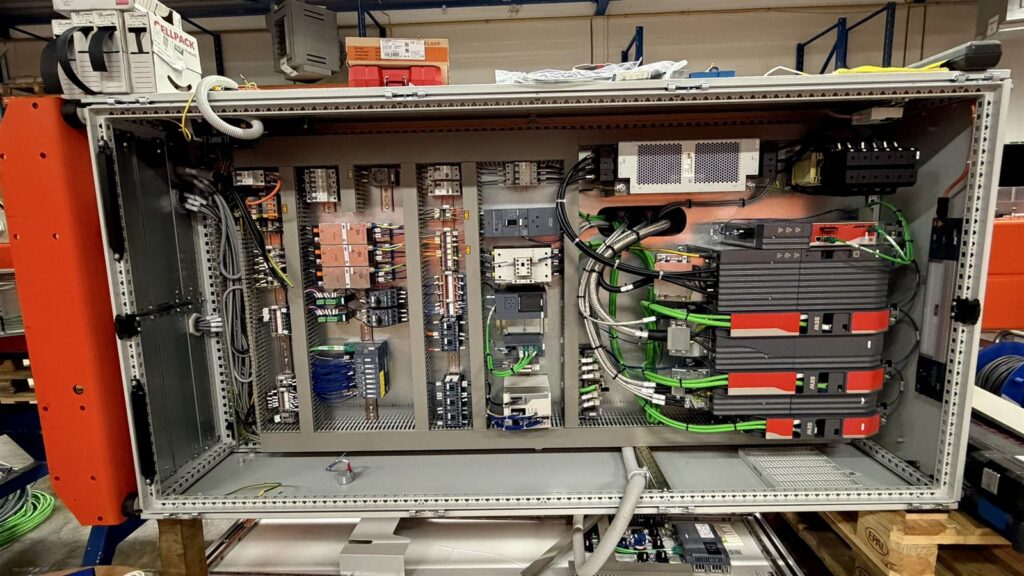
Commissioning here is not a matter of “it runs”. We work through a fixed list before an installation is released: connections and earthing to the drawing, circuit breakers set to the calculated values, directions of rotation and tightening torques checked, drives and encoders addressed, software loaded, all inputs and outputs tested, and the safety functions checked and signed off.
What we come across along the way is recorded, and that goes with the installation. You get the machine, and the file with it.
Something new, or something extra?
What do you have now, and what will it need to do? We will look at what is needed and what it involves.